Team at home, spindles in continuous use
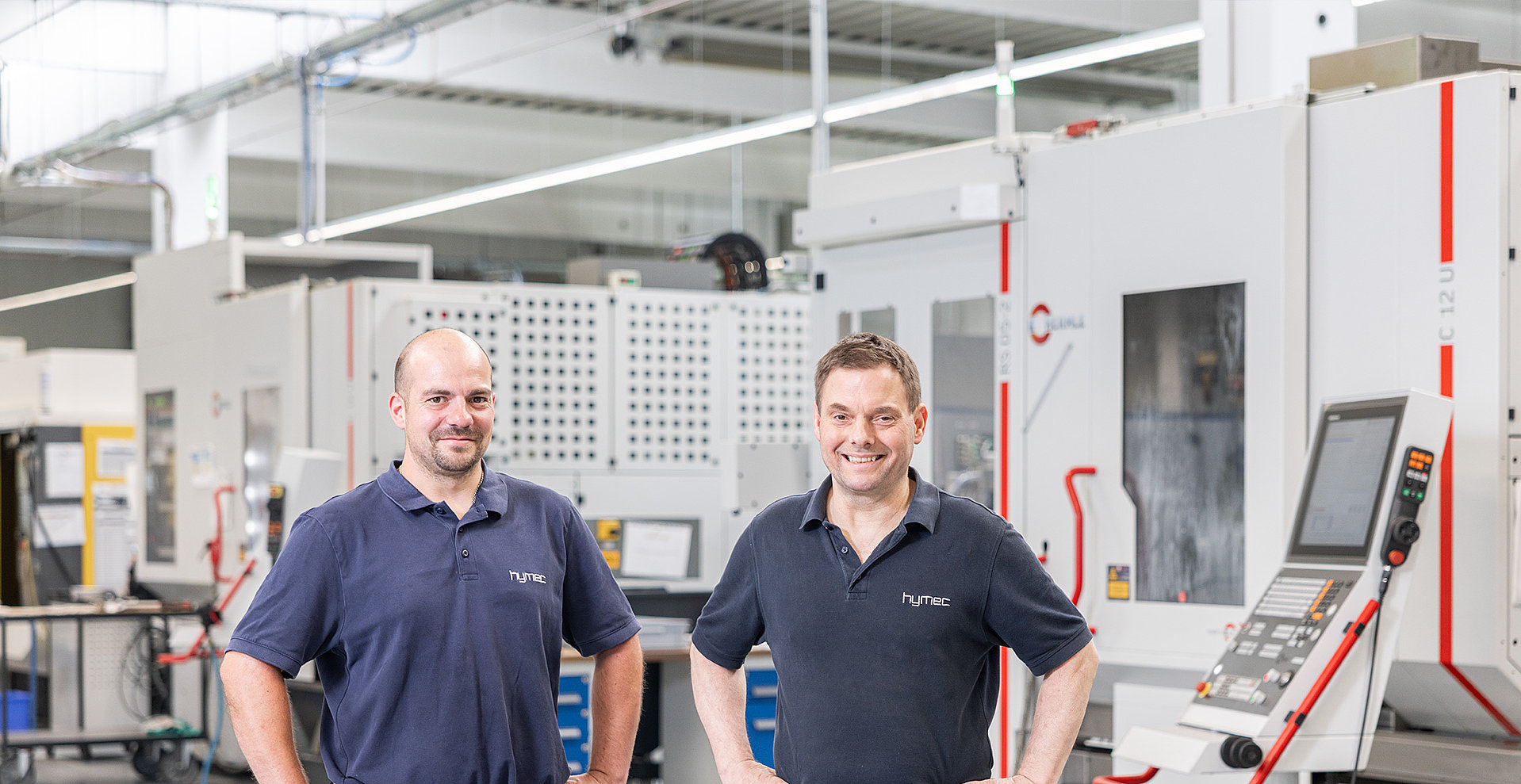
The contract manufacturer Hymec machines complex medical products on two HERMLE C 12 machines. The systems utilise the robot system RS 05 in various configurations: The older one stores small pallets in the rack, while the younger one is designed as a matrix variant. This is how the company keeps its machines running and enhances its position to take on additional orders.
Overnight and at weekends, it is quiet on the shop floor at Hymec. The workforce is at home. Work nevertheless continues in the machine shop: The robot system RS 05 supplies the two 5-axis milling centres C 12 with pallets and individual parts. "The HERMLE machines work almost around the clock," says Patrick Heinzelmann, production manager at Hymec.
The 'manufacturer of precision-engineered components' is a family-owned business, now in its second generation, with twelve employees. The company was founded in 1972 as a hydromechanical workshop and, through precision engineering orders, evolved into a medical technology supplier. Today, implants, instruments and other medical components account for roughly 60 to 70 per cent of the business. Furthermore, Hymec Fertigungstechnik GmbH machines components for the optical and precision engineering sectors. Eleven years ago, the company relocated to Norderstedt, which lies north of Hamburg, and has been steadily expanding its level of production ever since.
Hymec purchased its first HERMLE 5-axis machining centre in 2015. It was the fulfilment of a long-cherished dream for the company's managing director and owner, Tibor Veres. "I'm a machine fanatic. Back when I was an apprentice, I used to stroll around trade shows and sneak a peek at the HERMLE milling centres, wondering how to pay for a system like that and use it profitably," he says with a grin. However, the decision was not based solely on personal interests. Veres recognised the C 12, equipped with the adapted robot system RS 05, as the ideal solution for small, complex parts that would drive further growth of his company. Since the milling centre guarantees the necessary working area and stability for applications where precision and surface quality are critical. This is true, for example, for the cobalt-chromium implants which Hymec usually machines in batch sizes ranging from one to 1,000.
-
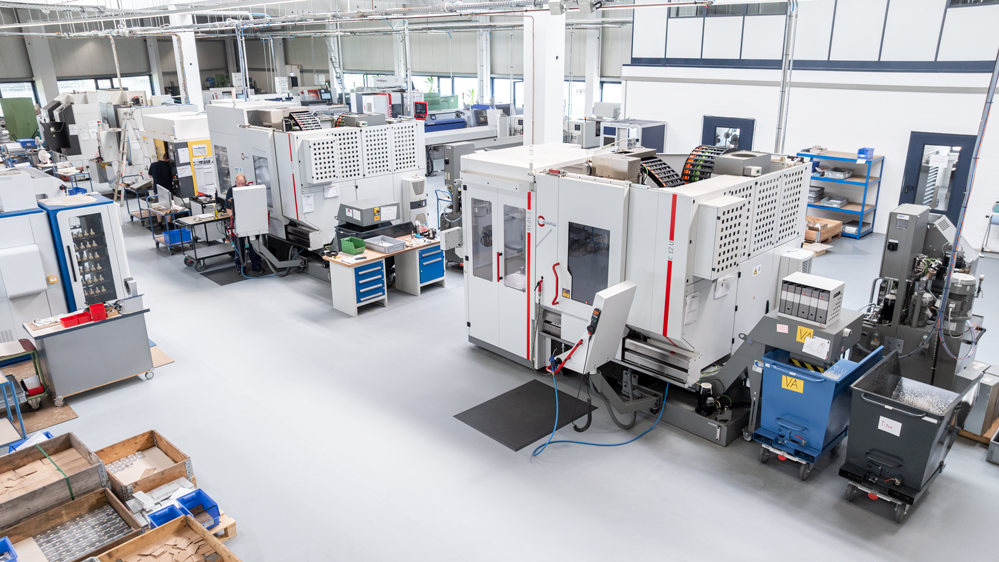
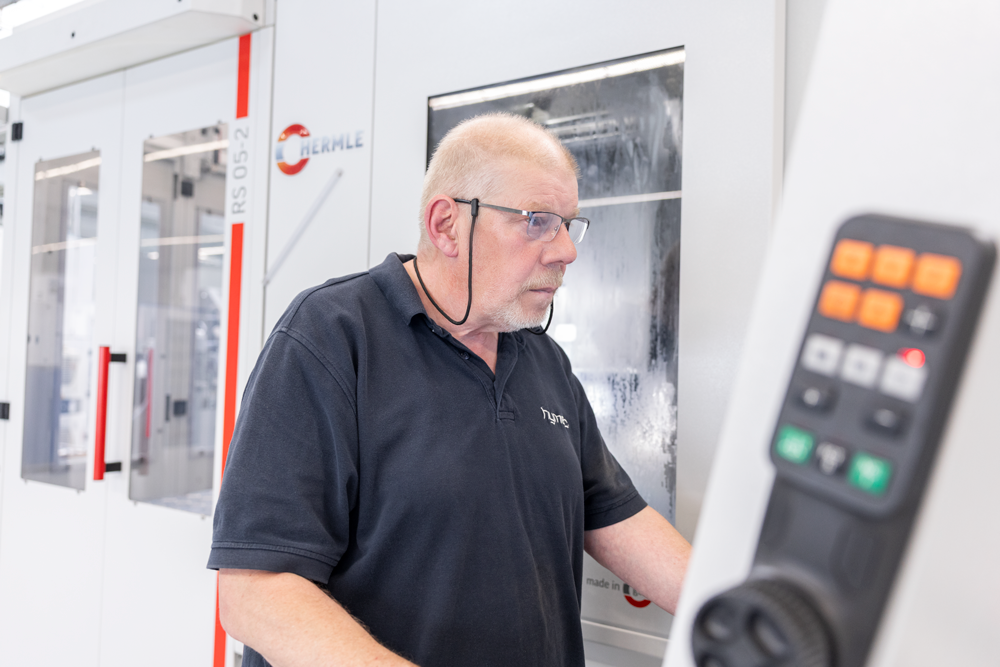
The 5-axis machining centre C 12 with the adapted robot system RS 05-2 machines medical products around the clock. -
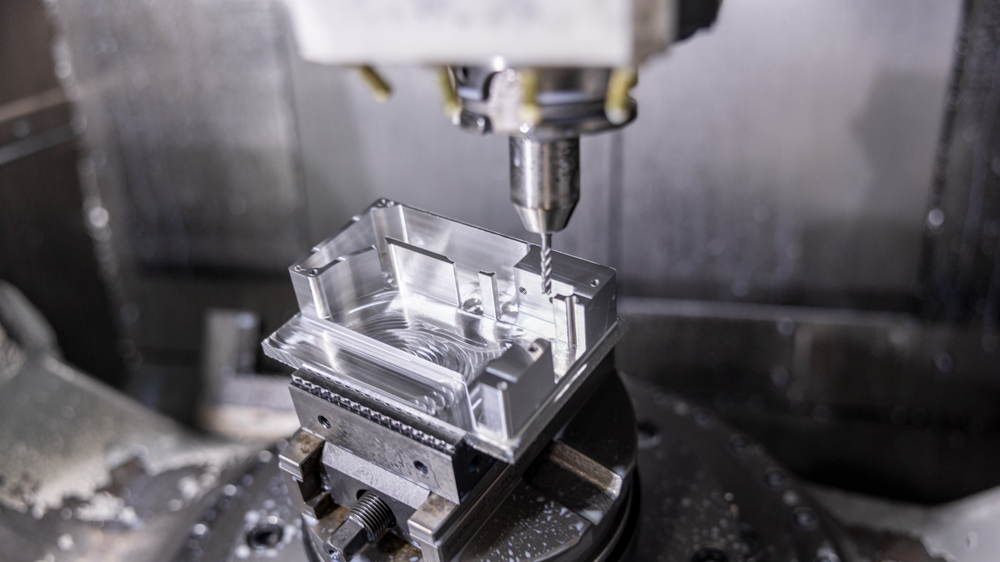
Demanding materials, tight tolerances and high surface quality – Hymec has found the ideal machine for production. -
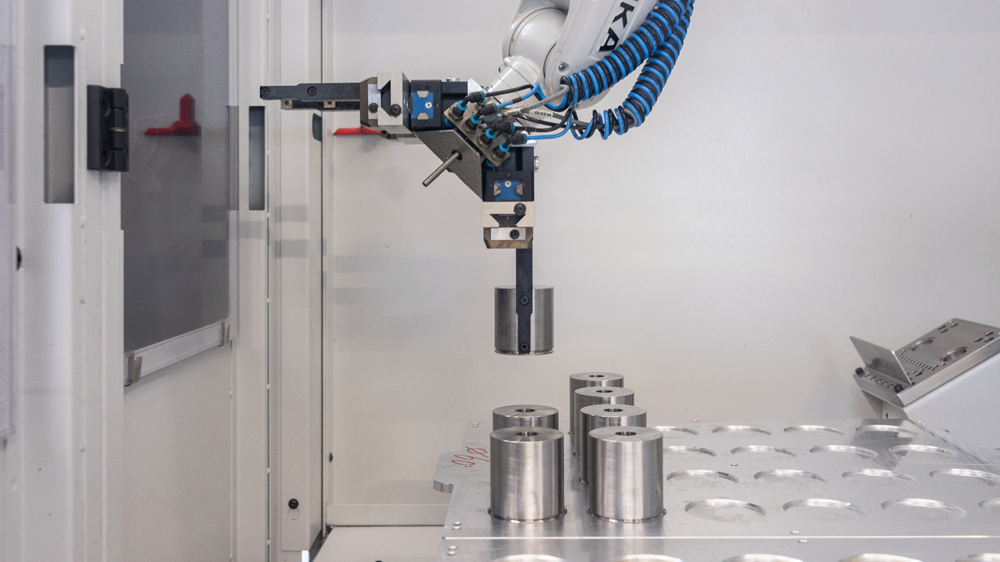
At Hymec, the robot system RS 05-2 is used to handle small components for automated series production. -
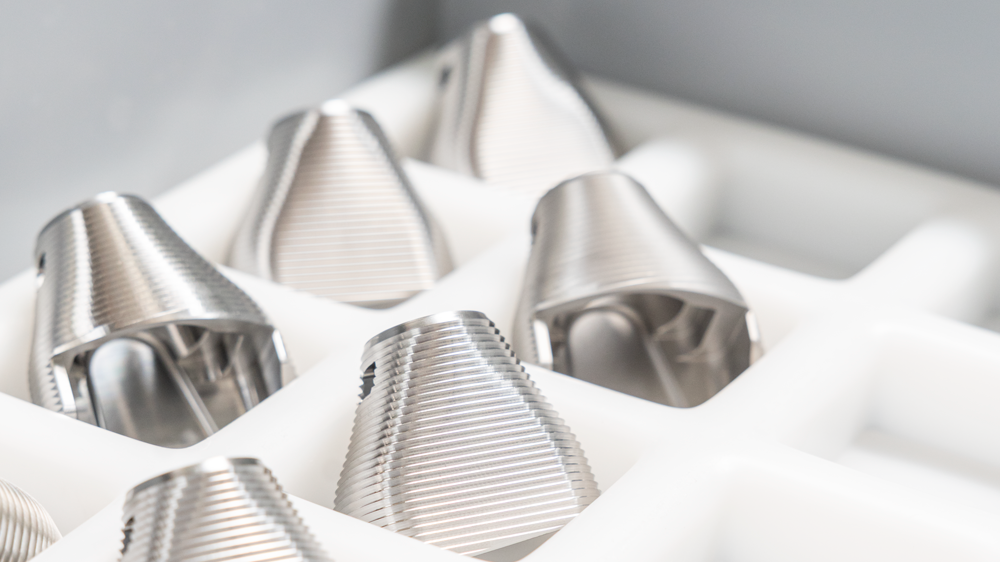
Implants for the cementless reconstruction of bone defects in the femur and tibia. -
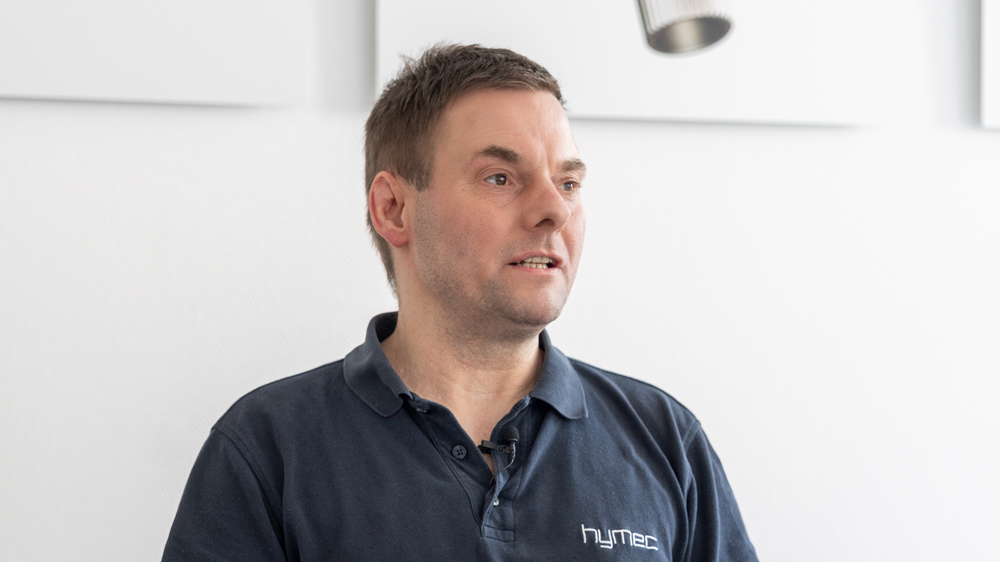
Production manager Patrick Heinzelmann: "We manufacture medical products on the two C 12 machines, as they enable us to reliably meet the level of precision required. The team rarely needs to intervene and can therefore complete more orders," the production manager explains.
It all started with an order
In 2020, a customer wanted to enter into a multi-year contract, and Hymec took the next step: "We had to decide whether to turn the offer down or to create additional capacity," recalls Veres. The company invested in a second C 12, this time with an adapted robot system RS 05-2. "We manufacture medical products on these 5-axis machining centres, as they enable us to reliably meet the level of precision required. The team rarely needs to intervene and can therefore complete more orders," the production manager explains.
Nevertheless, managing director Tibor Veres regularly reviews all the processes. The boffin is not only on the lookout for new technologies but also for better processing strategies. For one component, he was able to reduce the number of clamping setups from five to just one. "This restored the profitability of our production," he says proudly.
Preparation during the day, production at night
Hymec employees work one shift a day. Overtime and weekend hours are not part of the model. During the day, the team focuses on prototypes as well as on pilot and small series. The employees set up new orders, inspect the initial parts and test machining processes. A process is not scheduled for overnight or weekend production until it is running smoothly without any problems.
Today, the company also uses automated machining processes to manufacture varying batch sizes of complex implants with tight fits and high surface quality requirements. This helps when customers need specific quantities at short notice. The employees benefit from routine working hours while Hymec is able to take on additional orders.
Greater capacity due to automated production
Thanks to its automated CNC milling centres, the company can now manufacture components that were previously beyond its capacity. Output has increased without any significant growth in team size. "If we had not taken this decision, some orders would now be beyond our reach," says Veres. Automation does not replace skilled labour but rather shifts its focus. The team sets up processes, evaluates the results and further develops production. "For us, it has always been clear: Automation does not take away jobs," adds the managing director.
At Hymec, optimum machine cooling is also crucial for stable production. This is the reason why the company equips all its machining centres with Fluidlynx Coolant from Motorex. The system monitors the concentration, pH value, temperature and electrical conductivity of the cooling lubricant and automatically maintains them within the standard range. This helps keep consistent conditions throughout the milling process, even when the machines are running unmanned overnight and at weekends.
Service when it is needed
For Hymec, support is just as important as the precision and reliability of its machining centres. If a machine stops unexpectedly, a quick fix is needed. Veres recalls a Saturday when the robot suddenly stopped working. A HERMLE service technician accessed the system remotely, provided expert guidance and gradually restored it to operation. "Afterwards, we were able to continue production and fulfil our orders on time," explains Veres. For a small company, that makes all the essential difference. It is important because if a machine stops, the whole process breaks down and delivery is delayed.
Hymec still has space for even more machines. For Veres, whether it is used depends less on the technology than on the people who use it. The shortage of qualified employees has been extremely noticeable in recent years. An experienced CNC programmer has now been added to the team. "If things develop as I hope they will, we'll soon be taking the next steps," he reveals.