Diversity as a manufacturing principle
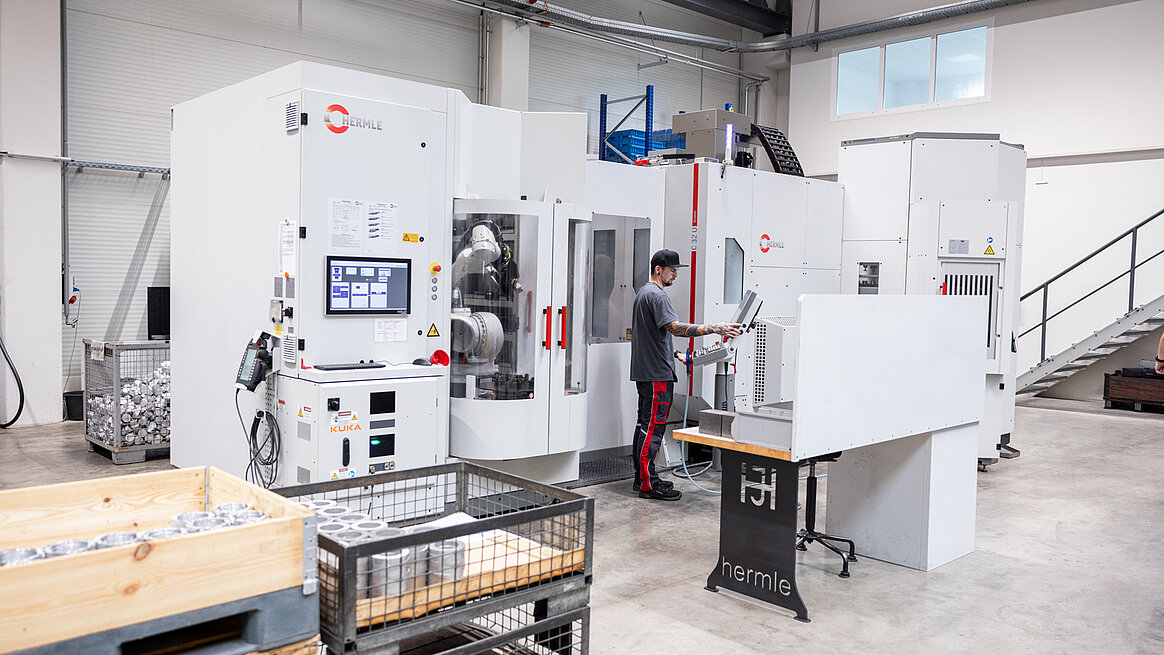
The machine is still running long after everyone has gone home. As a subcontractor, automation was not an end in itself for HEIM but a strategic further development. Today, the 250-year-old family business operates around the clock thanks to the 5-axis machining centre C 32 U and the adapted robot system RS 1.
A sense of focused calm prevails at the company’s premises in Eggolsheim north of Nuremberg. The once frantic conversions and manual reloading activities have now been replaced by a precise and automated rhythm of gripping, positioning, machining and setting down. At the heart of this state-of-the-art production environment is the HERMLE 5-axis machining centre C 32 U with adapted robot system RS 1. What initially appears to be a classic automation story is, on closer examination, the technological foundation of a sustainable growth strategy.
HEIM’s story began in 1776 in Bamberg and is a tale of consistency and adaptability. Over seven generations and 250 years, the family business has combined its love of craftsmanship with a passion for metal to become a leading subcontractor specialising in machining, welding technology, sheet metal working and laser cutting. Today, the company operates under the name Stahlbau-Metalltechnik Johann Heim GmbH from facilities in the Upper Franconian municipalities of Hallstadt and Eggolsheim and employs roughly 130 people.
The move to Hallstadt around 50 years ago heralded the start of a period of continuous growth. However, for Manfred Ostarek, production manager at the facility in Eggolsheim, it is not the actual size of a company that matters but the philosophy behind it: “Our greatest strength is our diversity, which prevents us from relying on just one sector.” Since acquiring the Eggolsheim location a few years ago, the subcontractor has expanded its portfolio to include large-scale production runs of up to several thousand units.
-
CNC milling operator Marco Kaspar first heard about the HERMLE automated solution through an online video: “The system matches our requirements perfectly.” -
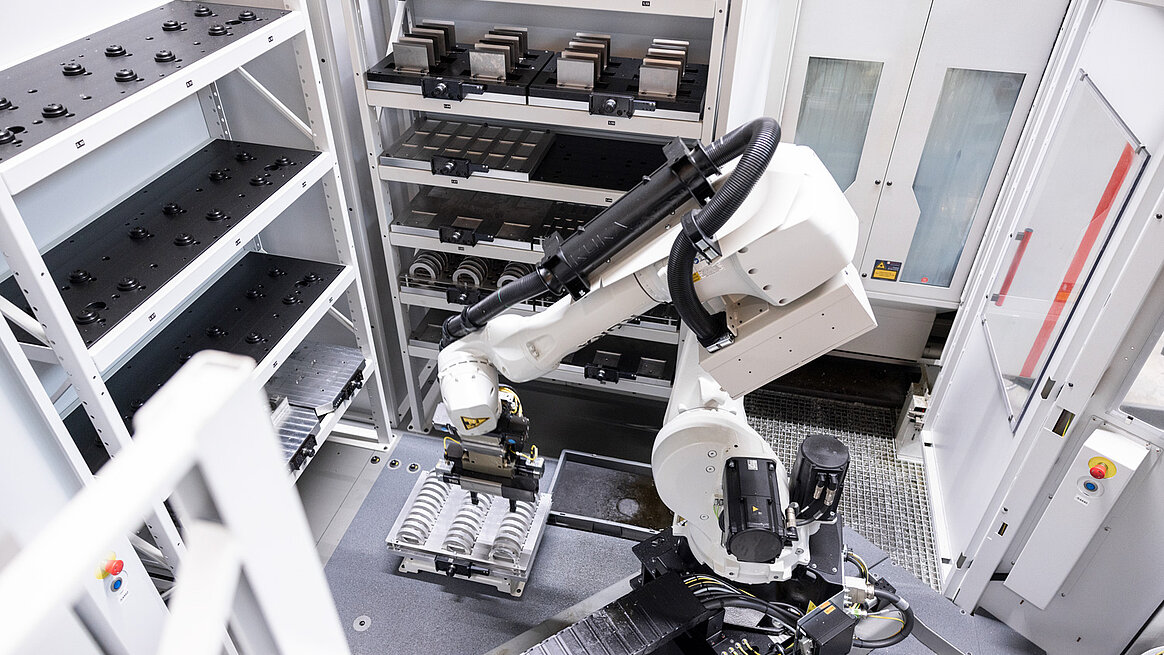
Thanks to the robot system RS 1, HEIM now operates around the clock, unmanned and flexibly, while reducing part costs and throughput times. -
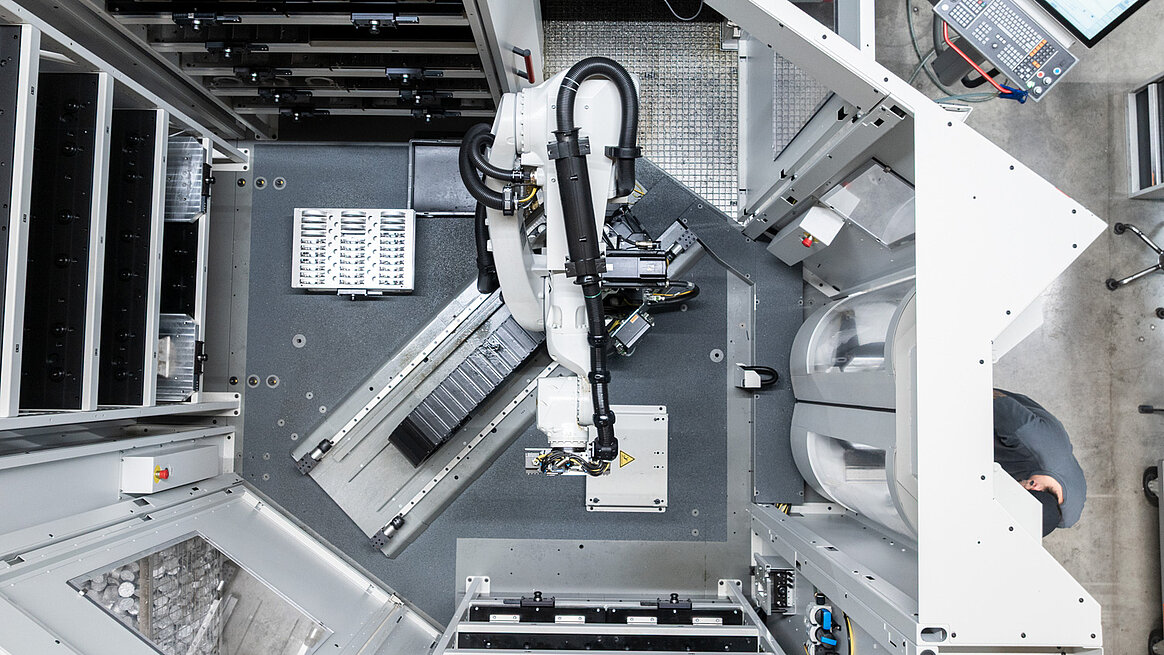
Thanks to the robot system RS 1, HEIM now operates around the clock, unmanned and flexibly, while reducing part costs and throughput times. -
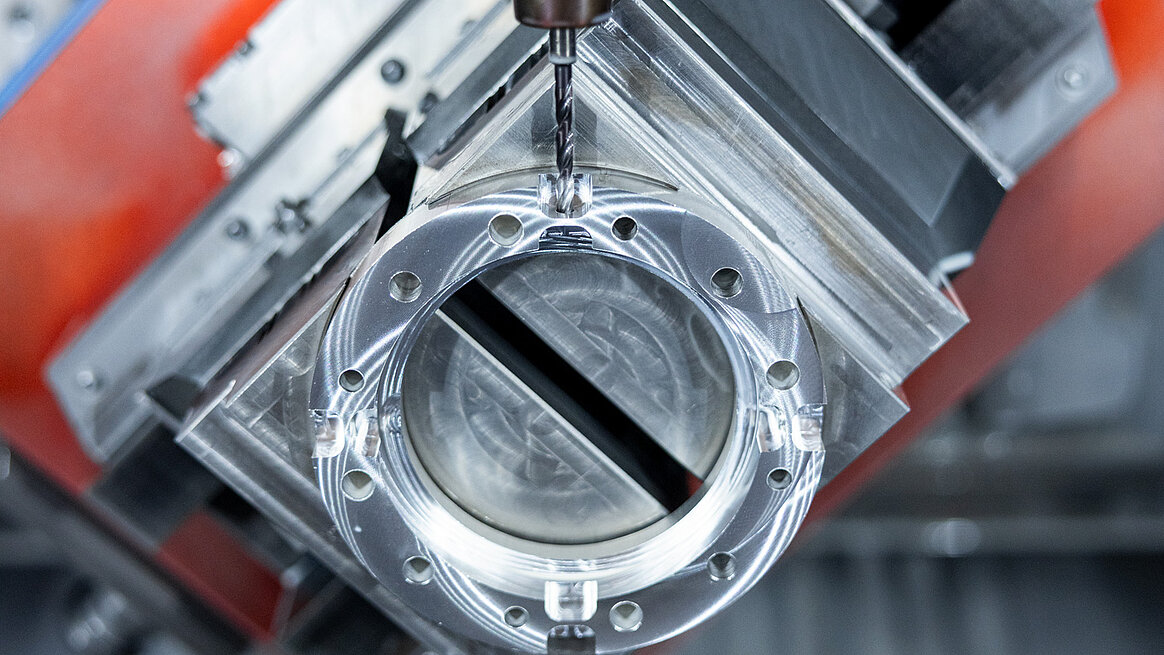
Highest precision: from individual parts to large-scale production runs of up to 2,000 workpieces. -
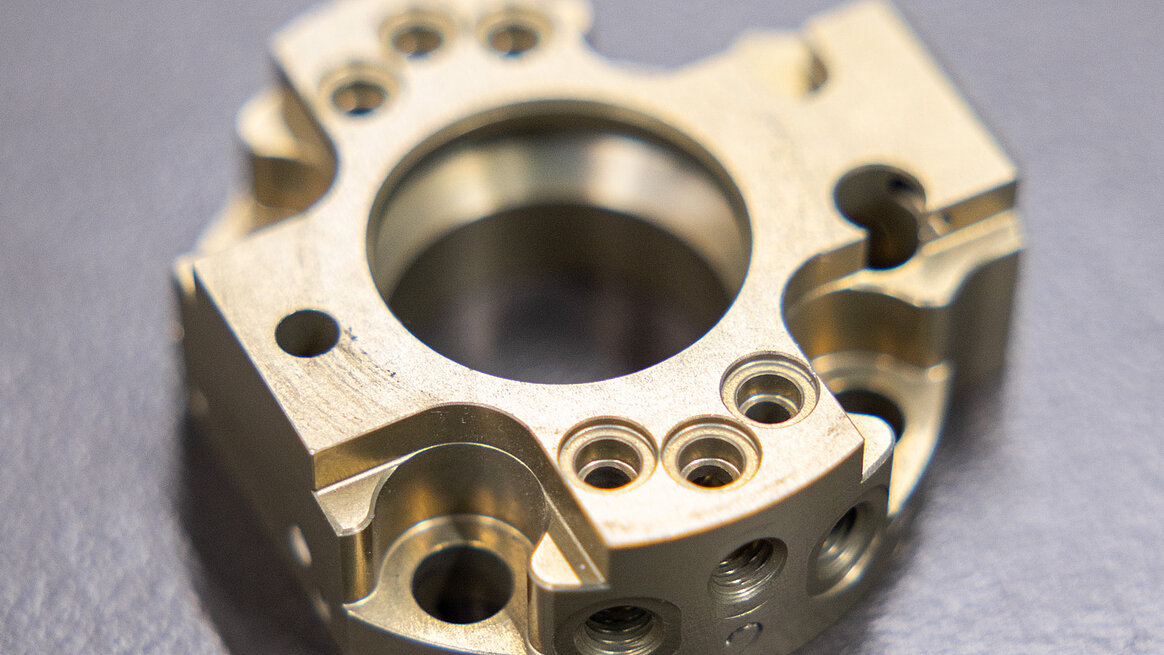
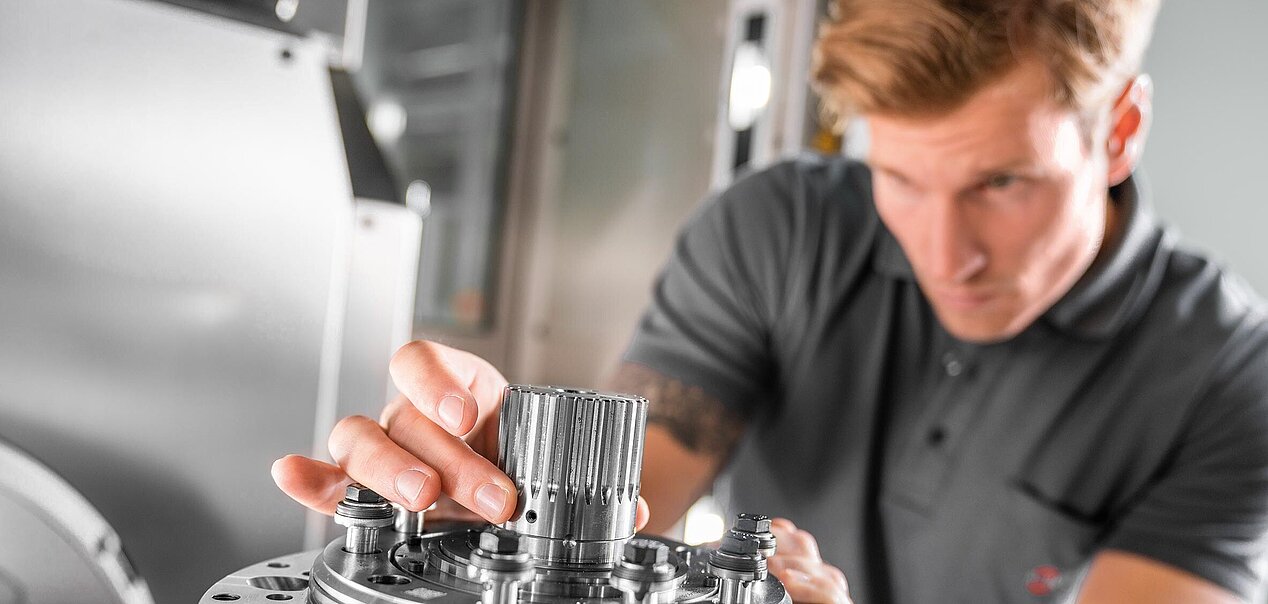
Precise contours, reliable tolerances – HEIM specialises in components for the energy sector, robotics and hydraulics. -
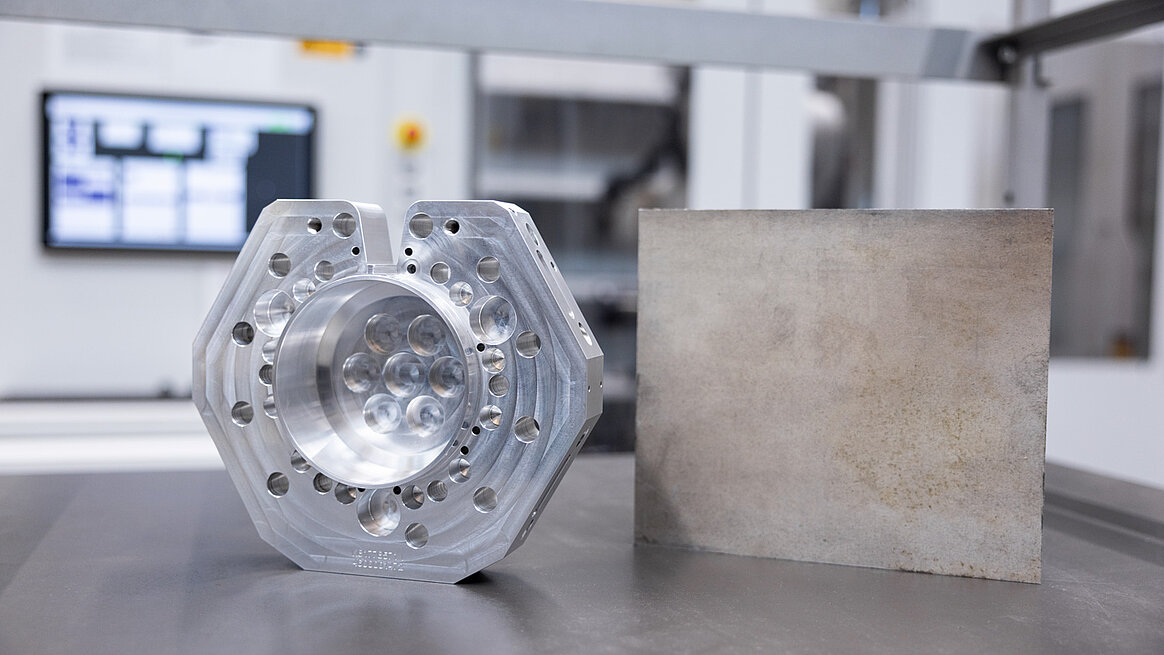
HEIM machines components for robotics and hydraulics with consistent repeatability. -
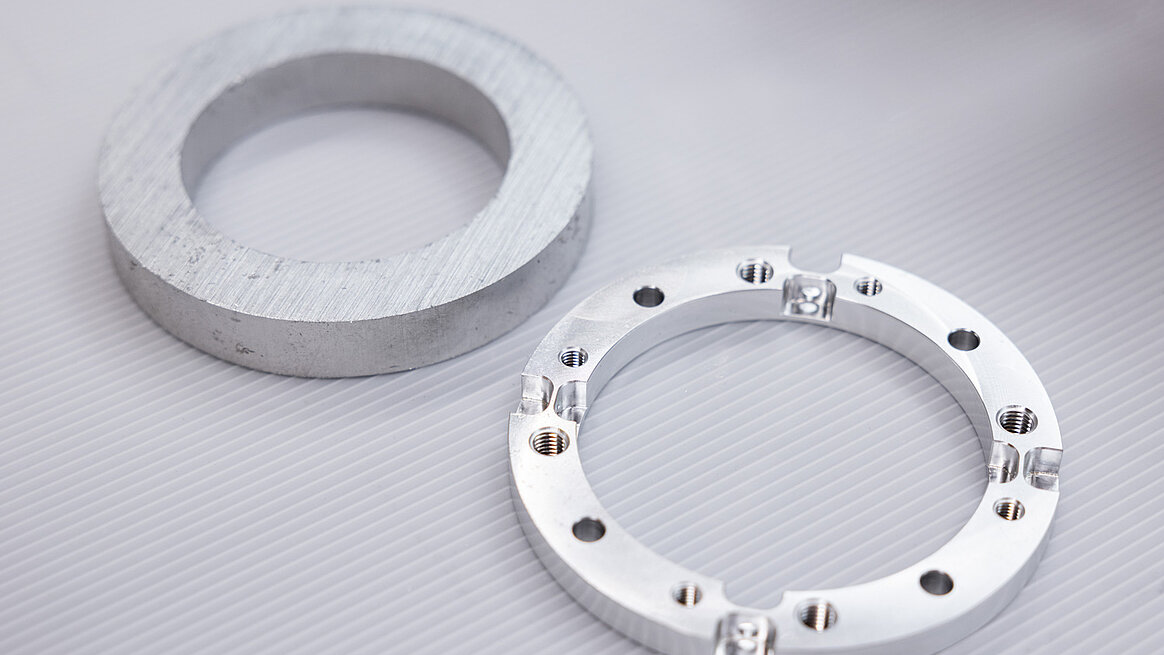
Accurate dimensions, safe operation: Precision parts for robotics and hydraulic systems.
The challenge: Pricing pressure and complex geometries
Diversification helps to protect HEIM against economic volatility. While energy technology – from power generation to distribution – is a key pillar of Hallstadt’s business, Eggolsheim specialises primarily in hydraulic engineering. Back in 2022, this diversity strategy reached a turning point. An order for 2,000 technically intricate robot parts posed a real challenge to the existing processes. The tolerance demands were a major challenge, and the pricing pressure from customers was immense. It became clear: To ensure cost efficiency across batch sizes ranging from prototypes to large-scale production runs, production had to become less dependent on manual intervention.
The primary driver behind today’s automation initiative originated in the manufacturing department: CNC milling operator Marco Kaspar first heard about HERMLE through a YouTube video. It showed an automated machining solution that matched HEIM’s requirements exactly: The system can map an extensive range of parts without human intervention. Manfred Ostarek remembers: “We picked HERMLE because we were immediately impressed by the system’s flexibility and its very competitive price.”
Two technical features, in particular, were the reason for combining the C 32 U and the RS 1: Firstly, the system accommodates component sizes ranging from 15 to 250 millimetres and can switch between the various sizes automatically. This enables unmanned operation across numerous shifts. Secondly, the system can process various batch sizes cost-effectively – from small-scale production runs right through to orders comprising several thousand components. Yet another critical factor was the tool capacity. The additional magazine ZM 216 holds 216 tools and supplements the 36 machine pockets. HEIM thus benefits from greater flexibility. Eliminating the need to set up the system again when switching between jobs minimises setup times and boosts operational efficiency.
The journey to automated production: A learning curve
However, implementation of such a high-end solution did not always go entirely to plan. Manfred Ostarek openly describes the first six months as a “rocky journey”. “There were quite a few curse words throughout this period,” he admits. The challenge was less about the hardware and more about changing a mindset: Programmers and operators had to learn to view processes from the perspective of automation.
During this phase, HERMLE’s service team formed the backbone of the project. “Whenever we required application engineering support, we were able to speak with a technician about our questions within an hour at the latest,” claims Manfred Ostarek. “And if they were unable to solve the problem, a technician would be round the next day to deal with it,” he says when describing the excellent cooperation. Thanks to this rapid response, faults never jeopardised the scheduled unmanned shifts.
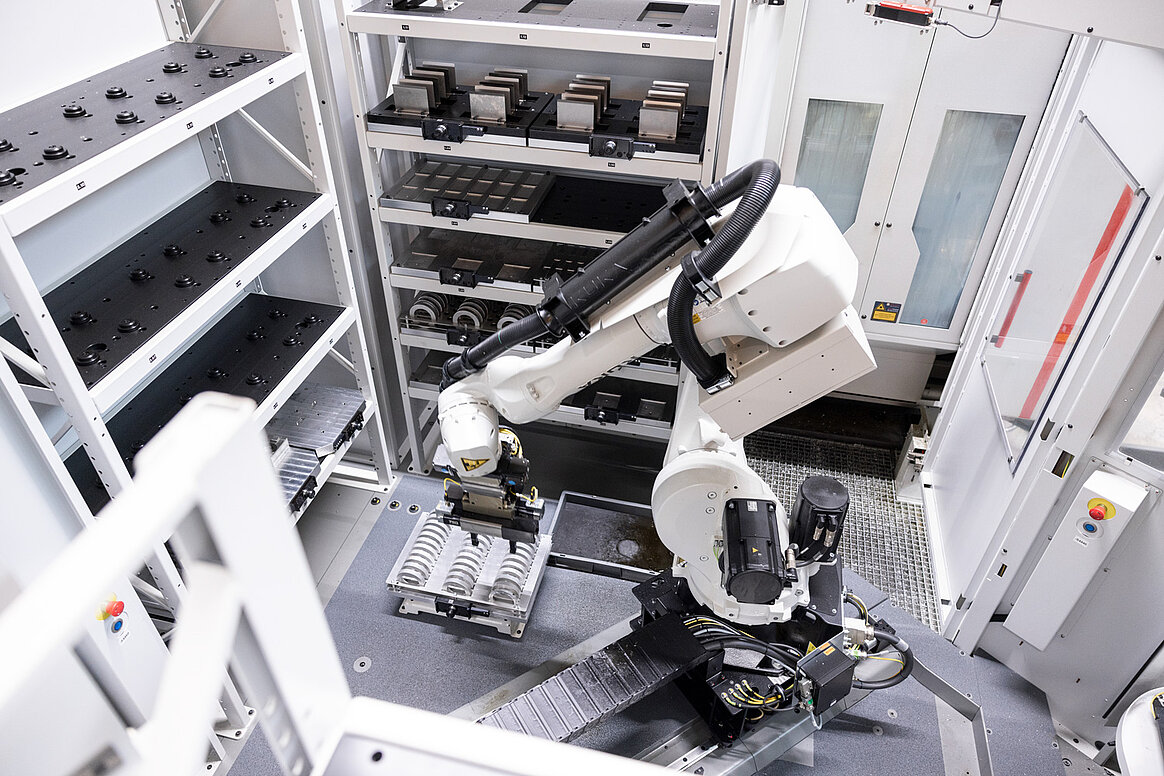
Real-world productivity: 24/6 as the new standard
The success of the strategic reorientation became evident when the first flawless parts from the demanding production run were manufactured fully autonomously overnight. Today, HEIM uses its C 32 U to machine a mix of brass, copper, aluminium, stainless steel and even cast steel. Despite the varying demands on cleaning and the level of contamination, the process remains stable. “I would say we have already reached 24/6,” explains Manfred Ostarek. Sometimes the system also runs for a whole fortnight without a break. By transferring existing components to the HERMLE system, HEIM was able to reduce the costs per part and significantly enhance its competitiveness. Further, optimised chip management has contributed to a significant increase in service life. “We were pushed to our limits time and again at weekends,” recalls Manfred Ostarek. “The chip container was full and machining came to a halt.” Thanks to a briquetting press, this problem has now been resolved.
At HEIM, automated 5-axis machining is not a stand-alone solution for specialised tasks but a robust standard process for mixed-production. The combination of the C 32 U and the robot system RS 1 proves that automation and maximum versatility are not a contradiction in terms. For a 250-year-old company, this technology is key to ensuring its flexible response to market demands in the future.