Milling, turning, power skiving
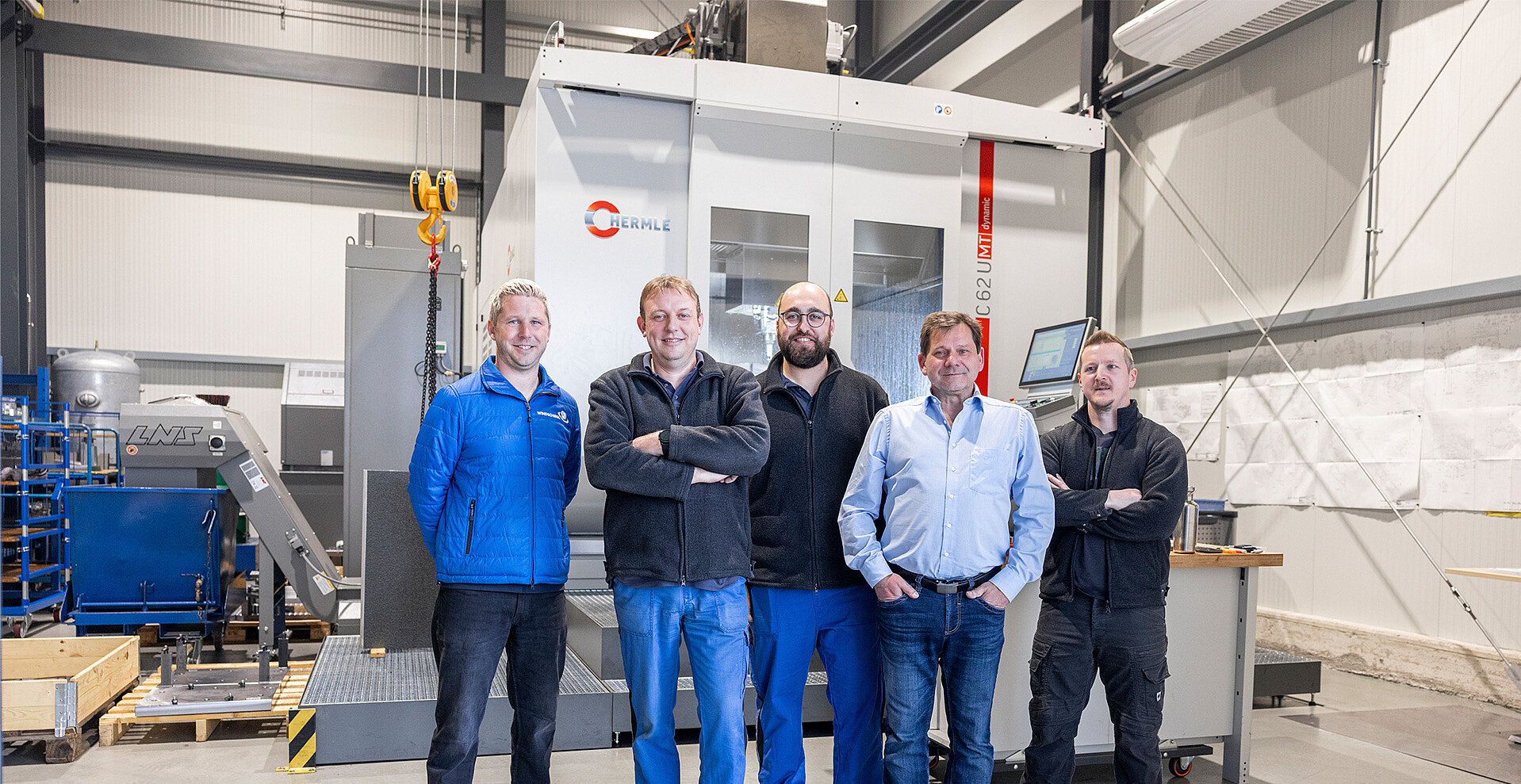
Based in the heart of the Upper Palatinate region, WINDSCHIEGL utilises a manufacturing concept that combines precision, flexibility and productivity. At the core of the system is the HERMLE 5-axis machining centre C 62 MT (Mill/Turn). It allows the subcontractor to machine complex workpieces fully in just a few clamping setups – quickly, accurately and cost-effectively.
Today, high-performance components for motorsport and specialised engineering are manufactured just a stone’s throw from Germany’s deepest borehole. We are talking about the Centre of Excellence for Deep Drilling of Germany’s Continental Deep Drilling Programme in the Upper Palatinate region – and about WINDSCHIEGL Maschinenbau, whose headquarters in Windischeschenbach are located next door to this landmark scientific project. A remarkable coincidence? Well, perhaps not. After all, working in the immediate vicinity of a research facility where precision under extreme conditions has long been the standard is bound to develop a special relationship with accuracy, stability and pushing technological boundaries.
WINDSCHIEGL was founded in the early 1990s as a traditional mechanical engineering firm. A change of ownership and a strategic reorientation in 2011 proved to be a key milestone. The company specialises in the manufacture of camshafts, gearbox components, gear machining and high-precision motorsport components. It currently employs around 80 people and supplies leading international customers from the automotive, aerospace and specialised engineering sectors.
From unfinished castings to finished high-performance components
Another key milestone was the acquisition of Becker GmbH CAD-CAM-CAST in 2025. This saw the addition of aluminium casting, SLM processes (selective laser melting) and additive manufacturing expertise to the portfolio. The result: WINDSCHIEGL is now able to offer everything from under one roof, ranging from casting and mechanical machining to camshafts, gears and flywheels. “With the exception of final mounting, we manufacture complete high-performance engines in-house,” explains production manager Daniel Schedl.
The increasing level of vertical integration also calls for a consistent approach to machining. Since manufacturers who assume more stages of the production process need machines that are capable of both machining complex components and finishing them consistently to a very high standard. To achieve this goal, WINDSCHIEGL invested in the HERMLE 5-axis machining centre C 62 MT. It features rotary functionality and an integrated zero-point clamping system and now forms the technological heart of the high-precision manufacturing facilities.
-
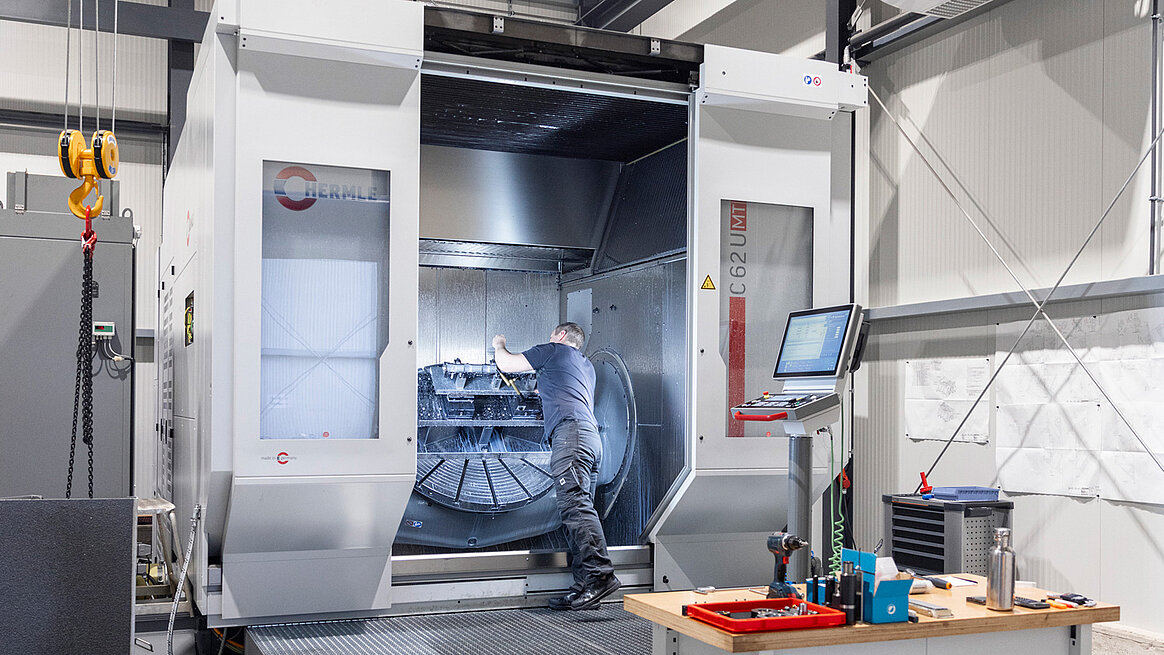
Milling, turning, skiving: With the C 62 U MT, WINDSCHIEGL has the perfect tool at its disposal for machining high-precision and complex components. -
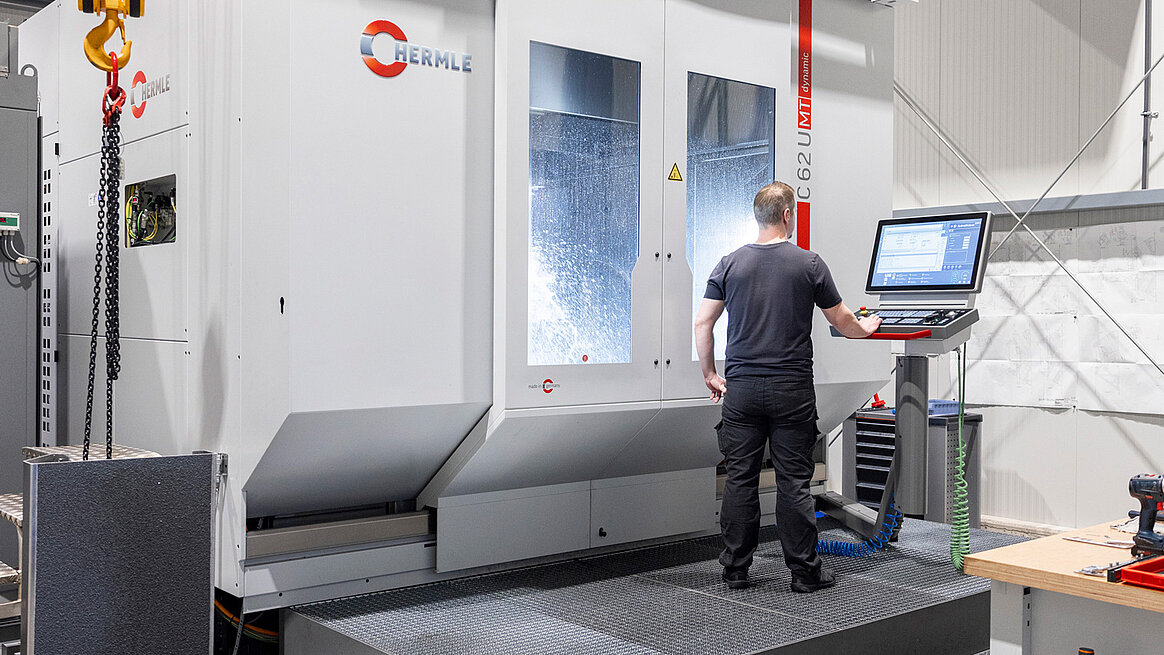
Milling, turning, skiving: With the C 62 U MT, WINDSCHIEGL has the perfect tool at its disposal for machining high-precision and complex components. -
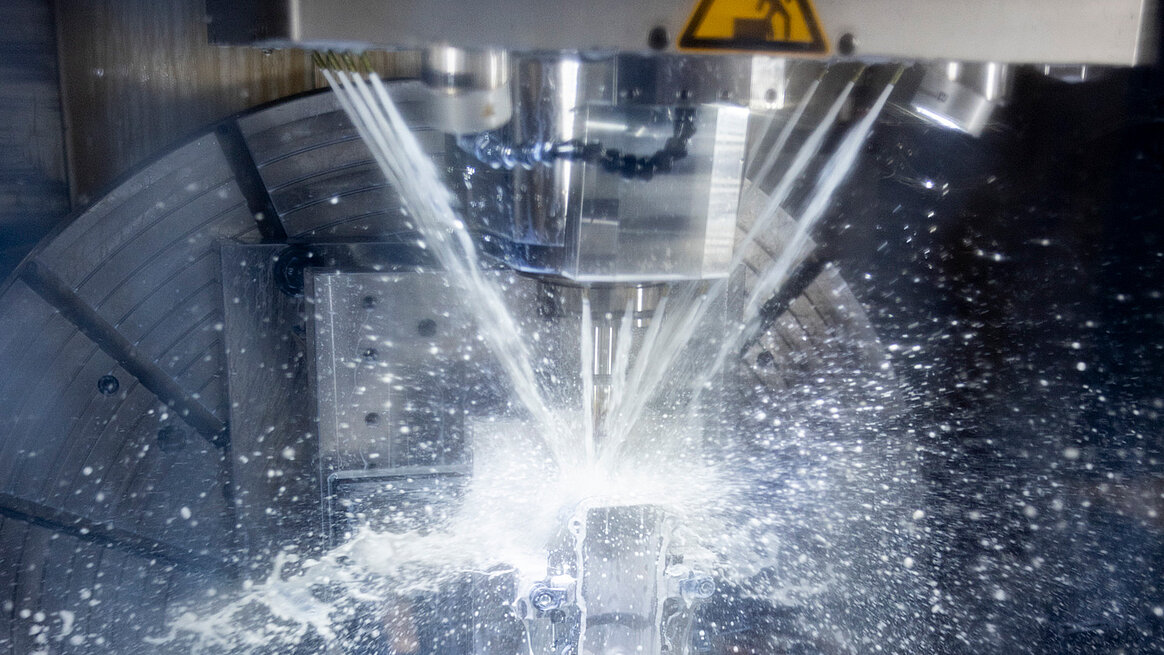
Simultaneous 5-axis machining under full load: The C 62 U MT manufactures complex workpieces with outstanding process reliability. -
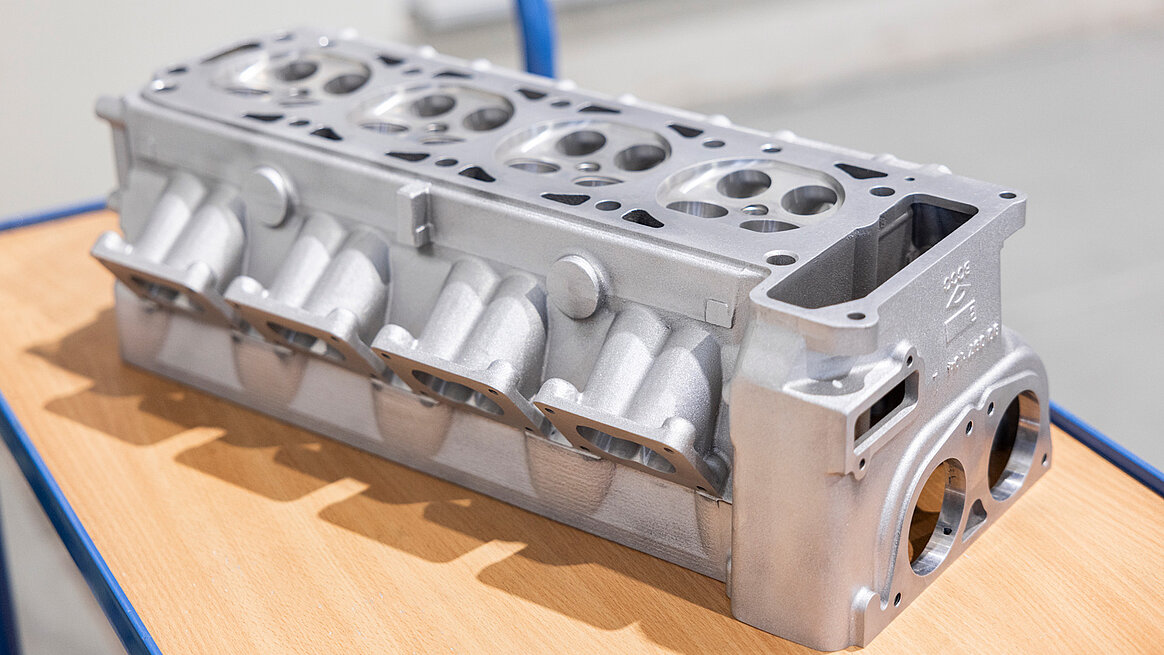
The faithfully reproduced motorsport cylinder head from the Retro Classic sector is manufactured on the C 62 U MT in three to four clamping setups.
Expectations that go beyond the norm
The specific reason for the new acquisition was an exceptional engine project. A customer demanded the highest levels of precision for bearing alleys and crankshaft bores in dimensions that even experienced machine operators were initially sceptical about. Markus Stocker, sales manager at WINDSCHIEGL, explains: “Over the course of my career, I have worked with a wide range of machining centres, but the level of precision we require can only be achieved with a HERMLE.”
It was the combination of simultaneous 5-axis machining, turning and milling in just one machine that proved to be a decisive advantage in terms of productivity. The C 62 MT machines complex components fully in just three to four clamping setups. For high-precision motorsport components with production times of 15 to 20 hours per workpiece, this represents a huge gain in efficiency. At the same time, the reduced number of reclampings minimises potential sources of error and significantly improves process reliability.
Prototypes by day, production runs by night
Furthermore, the milling-turning machine delivers enormous flexibility. Thanks to the additional magazine ZM 128, a total of 178 tools are available. This is a key advantage when dealing with frequently changing prototypes, small-scale production runs and custom components. During the day, WINDSCHIEGL machines highly complex prototypes on the C 62 MT; at night, it completes orders involving up to 20 workpieces. “We invested in the system because it allows us to turn and mill workpieces. The integrated power skiving function is used for machining the gears of larger components,” explains Markus Stocker. Power skiving is a continuous machining process that allows gears with complex geometries or hard-to-reach areas to be manufactured in a single operation.
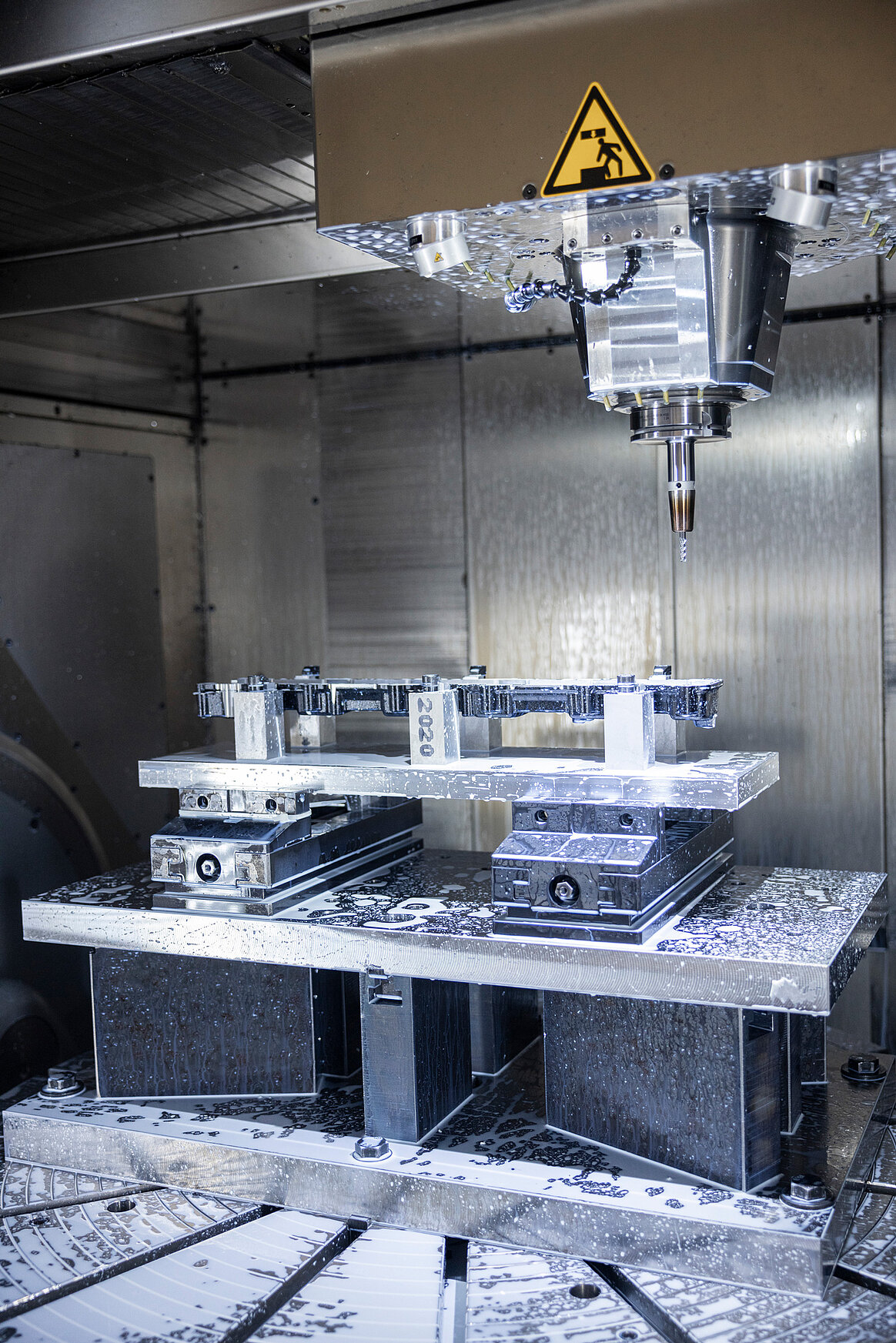
The actual machine is installed in an air-conditioned room on its own foundation. Temperature and process monitoring, as well as laser tool measurement, are included in the equipment package, as is a turnkey automation solution. For WINDSCHIEGL, this is not a luxury but a prerequisite for maintaining the required level of accuracy over the long term while continuing to improve productivity.
Fast start, high requirements
Machining began two weeks after installation and some intensive training; and a week later, the company produced its first flawless parts. However, the system’s simultaneous swivelling movements and horizontal machining feature initially commanded a certain amount of respect. “When the table rotates and tilts at the same time, the machine has a dynamic all of its own,” says Daniel Schedl. A key advantage of the C 62 MT lies in this machining strategy. Favourable alignment of the tool and workpiece makes it possible to reduce tool projections. This improves rigidity during contact and reduces the risk of tool deflection. It results in robust cutting conditions that have a direct impact on dimensional accuracy and process reliability.
The machining centre demonstrated its capabilities impressively when faithfully reproducing a motorsport cylinder head from the Retro Classic sector. The original manufacturer discontinued production of the component many years ago. Together with its foundry subsidiary, Becker, WINDSCHIEGL now supplies the owners of historic racing cars with cylinder heads that have been carefully redesigned and optimised. The entire machining process, including simultaneously milled channels and high-precision bearing alleys, is performed on the C 62 MT. Aerospace components, engine components and intricate special-purpose machine parts are now also produced on the new system. “Many of these workpieces were not previously feasible in this form,” explains Daniel Schedl.
Investment in reliability
However, WINDSCHIEGL’s decision to opt for HERMLE was not based solely on the technology. Above all, the decisive factor was the overall package of precision, availability and service. “The 24/7 customer service is outstanding; it is unmatched by anyone else on the market,” claims Markus Stocker. It comes as little surprise then that the first HERMLE has long played a special role within the company. Markus Stocker adds: “The machines retain their quality for not just a year but for ten years or more.”
This longevity approach is in line with WINDSCHIEGL’s strategic objectives. The company aims to establish itself in the long term as the exclusive partner for high-precision motorsport and high-performance applications. The investment in HERMLE technology is a key cornerstone of this vision.