Chips as the limiting runtime factor
Ossenbrüggen Feinwerktechnik machines large components in just one clamping setup using a 5-axis mill-turn version of a HERMLE C 62 MT. This creates the ideal conditions for tight tolerances and ensures greater process reliability and flexibility for the contract manufacturer.
While the 5-axis machining centre machines a component – which typically takes 20 to 40 hours – the next workpiece is ready and waiting at the setup station. To make full use of this time overnight and at weekends, it is not enough for the program and machine to operate properly. Tool storage, pallet handling, chip removal and quality control also form a coordinated, overall system. At Ossenbrüggen Feinwerktechnik, these processes work together seamlessly in everyday production. The contract manufacturer machines large workpieces with tight tolerances in just one clamping setup on a HERMLE C 62 MT with rotary functionality.
The goal: The component should no longer transfer between a turning centre and a milling centre. Each additional step requires another clamping setup and additional measurement tasks, which increases the risk of position deviations and damage. "We aim to avoid these interfaces, especially when machining large workpieces that require long runtimes and need to meet tight dimensional and positional tolerances," says Daniel Kiefer, production manager at Ossenbrüggen. Previously, components were first turned and then transferred to a milling centre for further machining. Today, the company combines several machining steps on just one machine.
-
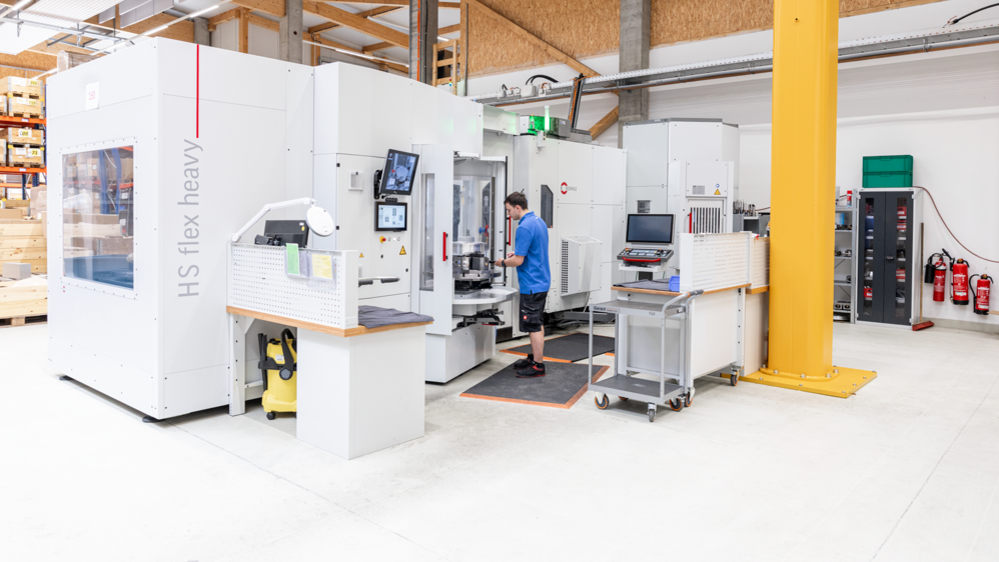
The C 42 MT combines milling and rotational machining in one machining centre. -
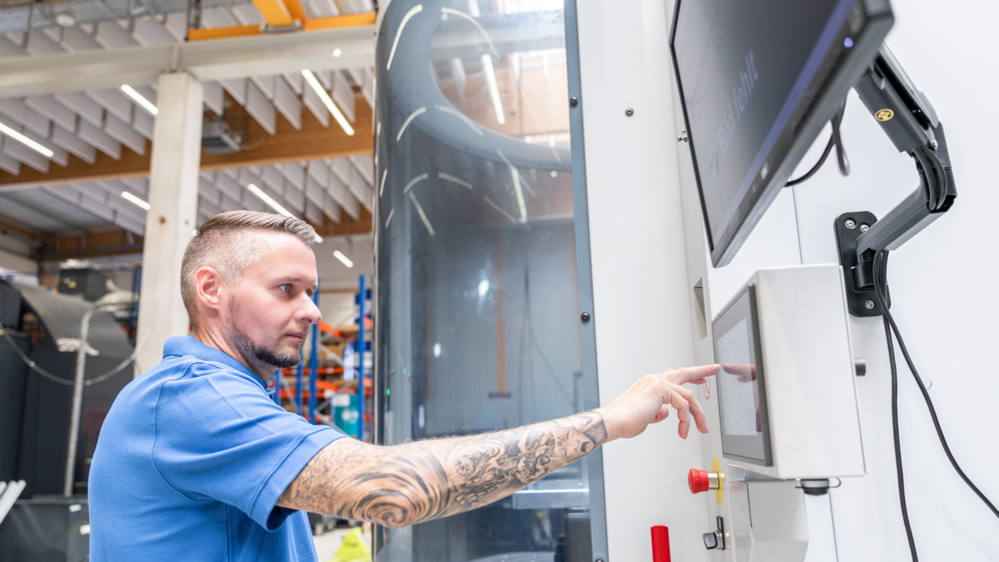
After starting the program, the C 62 MT machines components for 20 to 40 hours. -
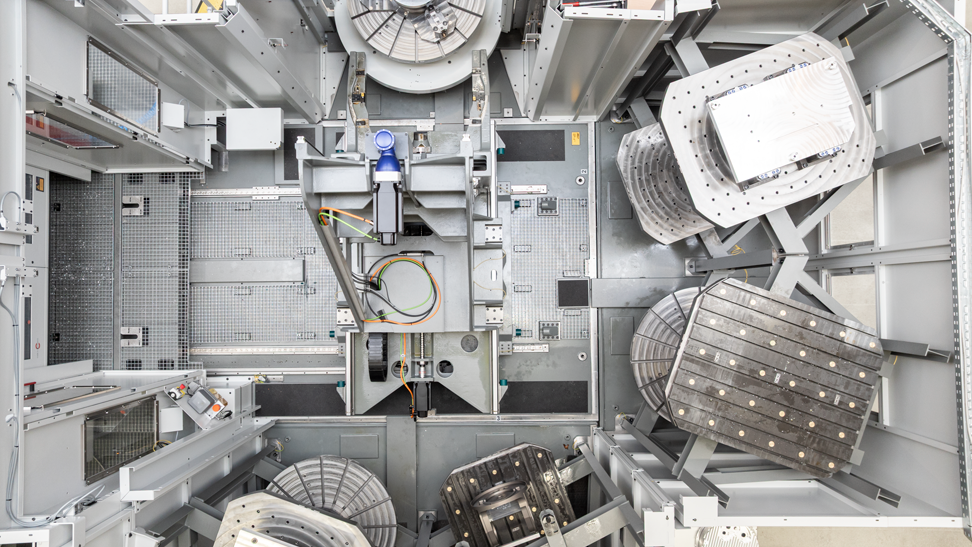
Der Palettenwechsler PW 3000 erhöht die personenlose Laufzeit. -
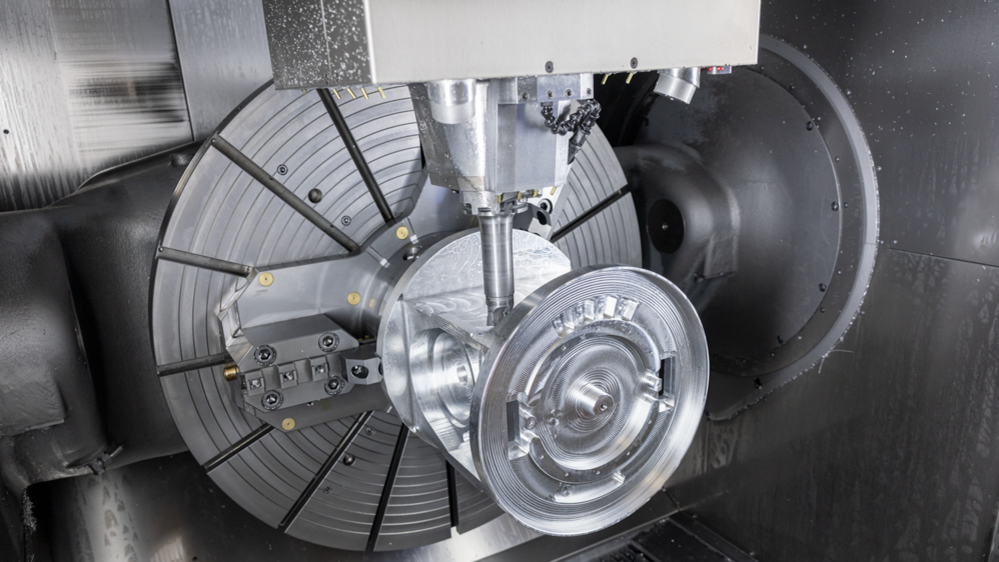
The component geometry develops step by step: The C 62 MT machines the workpieces with outstanding precision. -
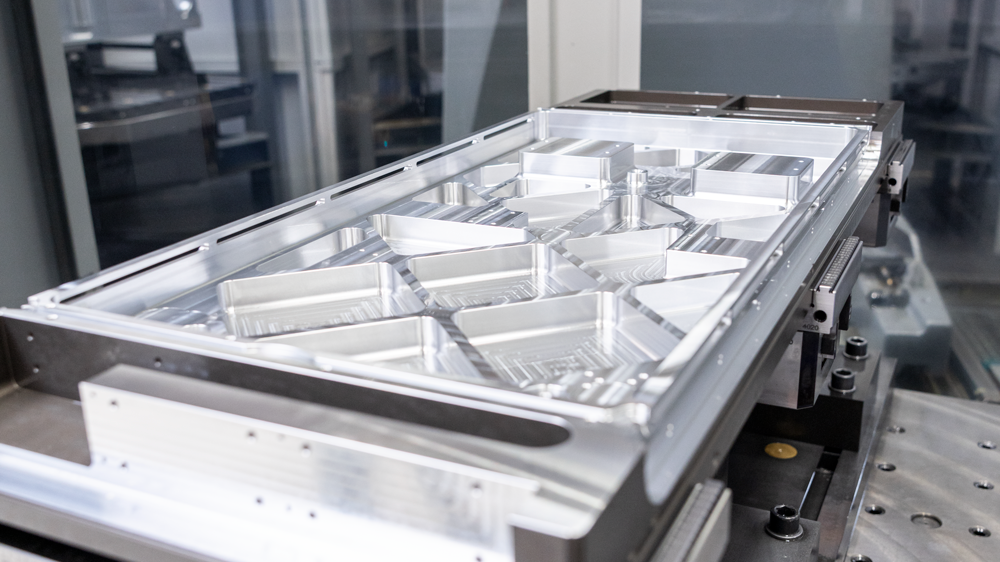
While the machine is busy at work, the next workpiece can already be set up. -
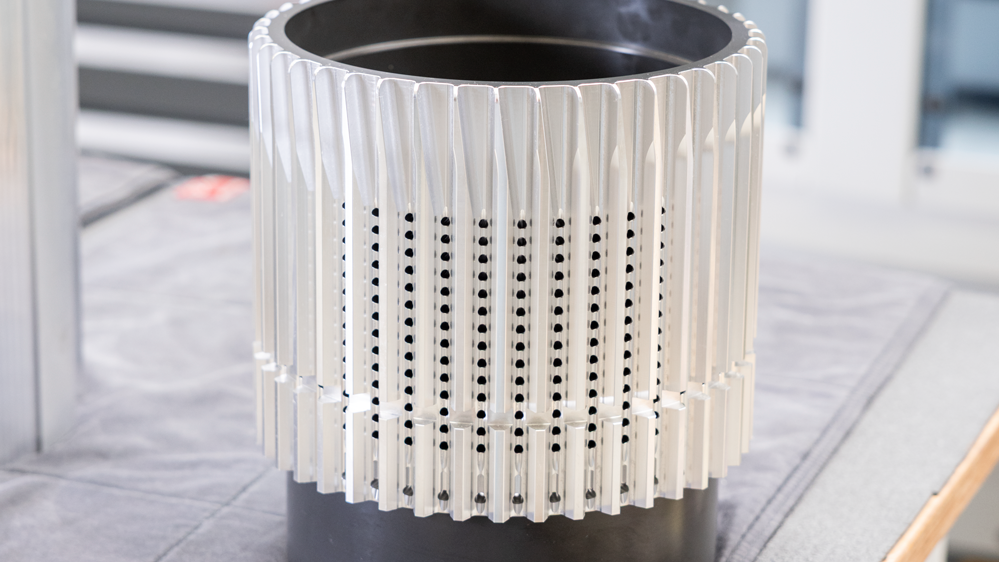
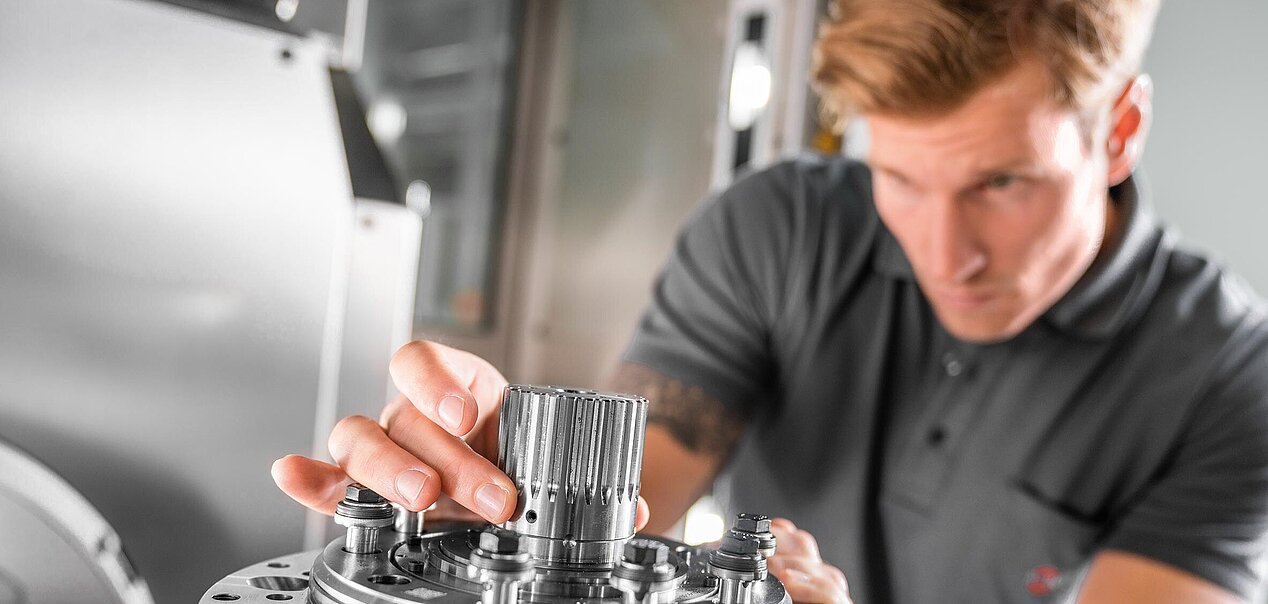
Besides dimensional accuracy, customers also demand perfect surfaces.
Many industries, small batch sizes, tight specifications
Nearly 10,000 square metres of production space, around 75 CNC machining centres and components for the laser, analytical and medical technology sectors, as well as for the semiconductor industry and mechanical engineering: At Ossenbrüggen, large-scale production meets an array of parts. Whether producing small series or machining large components, the company must complete every order reliably and cost effectively.
Ossenbrüggen Feinwerktechnik GmbH & Co. KG was founded in 2000 and is now based in Moorrege, which lies northwest of Hamburg. It employs around 240 people and machines aluminium, stainless steel, steel, non-ferrous metals, plastics and, occasionally, titanium. Batch sizes vary from prototypes and small pre-series production runs to recurring orders involving large quantities of workpieces. "Components, regardless of their size, have become significantly more demanding in terms of their dimensional accuracy in recent years," claims Jens Ossenbrüggen, managing director and company founder.
For example, additional specifications apply for components used in laser technology. Cooling lubricants must not be left on the surface for too long, as any residues will subsequently evaporate. "That can damage lenses or mirrors inside the laser systems," the managing director explains. These requirements have led Ossenbrüggen to realise that a successful production process involves far more than machining alone. Cleaning, material flow and quality control are just as much a part of component safety as the actual machining process.
Better to be steady than just fast
For Ossenbrüggen, evaluating machining processes means more than simply achieving the fastest possible cycle time. A program that manufactures a product faster may have its drawbacks if it places greater strain on the milling head and the machine. Tool breakage during an overnight production run brings the machining centre to a halt for hours. In the worst case, it could also result in damage to the component. "If the program runs two minutes longer, we might have taken a bit longer than planned. But there was no downtime, and the next morning, precision parts are waiting in the rack storage of the pallet changer," says Jens Ossenbrüggen. For the contract manufacturer, success depends on reliable overall performance: a stable process, perfect results and machines that make the most of the runtime available.
When market demand increases, the number of orders can rise at short notice. Production planning and customer service must then quickly adapt delivery schedules, machine capacities and runtimes. An additional system must therefore do more than just machine individual orders; it should also ease production bottlenecks and free up capacity to accommodate varying orders.
Standardised control facilitates detailed planning
In 2025, Ossenbrüggen expanded its machinery to include, in addition to a second C 62 MT, a C 42 MT GEN2, a C 32 GEN2 and the robot system RS 05-2. This allows the company to allocate workpieces of various sizes more precisely to the most suitable machines while further boosting its level of automation. For instance, the C 62 MT is the ideal choice for large and complex workpieces. It is the second machining centre of its kind at the company.
Jens Ossenbrüggen's strategy for retaining flexibility is having several machines of the same type. Milling centres with identical designs or similar technical specifications offer greater flexibility during peaks in orders or when a system is out of service. For the contract manufacturer, this additional capacity is crucial, as it allows production staff to respond quicker to changes. The operating logic of all HERMLE system is identical. "This enables us to deploy our staff more flexibly," says production manager Daniel Kiefer. And that facilitates detailed planning. When it comes to the control, Ossenbrüggen also relies on standardised processes: All the CNC machines operate with Siemens. This enables qualified employees to familiarise themselves faster with machining centres, regardless of which one they are working on.
Automated machining of large workpieces
The turning and milling centre C 62 MT machines workpieces weighing up to 2,500 kg and can accommodate parts measuring up to 1,200 mm in diameter and 900 mm in height. The additional magazine ZM 260 is configured as a double tower and can hold up to 260 tools – which complement the 50 tools in the machine. This enables the contract manufacturer to prepare machining operations that require a large number of tools without having to interrupt the process due to a tool change outside the magazine. At the new C 62 MT, the adapted pallet changer PW 3000 stores prepared components in eight pockets. "Automation allows us to extend production time through additional unmanned hours," explains Daniel Kiefer.
When machining large workpieces, however, there is more to unmanned runtime than simply leaving the machine running. Chip removal can also be a limiting factor. During periods of intensive machining, collecting containers need emptying roughly every two hours. In this case, a qualified employee would normally have to replace the carriage, even though the machine could continue milling. "We therefore use the chip presses C 62 MT, especially with large CNC machining centres," says Daniel Kiefer. They reduce the chip volume to approximately one-eighth of its original size. At the same time, Ossenbrüggen is able to recover cooling lubricant. The briquettes are easier to handle and can be disposed of more efficiently. The example shows: Reliable and extended runtimes are made possible through the coordination of automation, tool supply, pallet handling, chip removal, material planning and quality control.